

How is calacatta quartz stone made?
Jan 15, 2026
Leave a message
How is Calacatta Quartz Stone Made?
As a supplier of Calacatta quartz stone, I'm often asked about the manufacturing process of this exquisite material. Calacatta quartz stone has gained immense popularity in the construction and interior design industries due to its stunning appearance, durability, and low maintenance requirements. In this blog post, I'll take you through the step-by-step process of how Calacatta quartz stone is made.
Raw Material Selection
The first step in the manufacturing process is the careful selection of raw materials. Calacatta quartz stone is primarily composed of natural quartz crystals, which are among the hardest minerals on Earth. These quartz crystals are sourced from quarries around the world. The quality of the quartz crystals is crucial as it directly affects the strength and appearance of the final product.
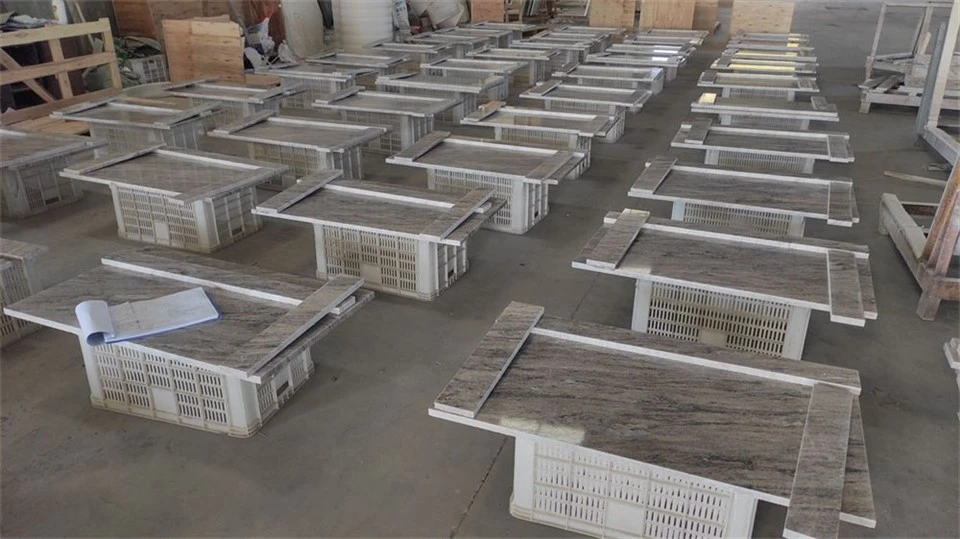

In addition to quartz, other materials are also used, including resins, pigments, and additives. The resins act as a binder to hold the quartz crystals together, while pigments are used to create the characteristic white background and gray veins that are reminiscent of natural Calacatta marble. Additives are used to enhance various properties of the stone, such as stain resistance and UV stability.
Mixing
Once the raw materials are selected, they are carefully measured and mixed in precise proportions. The mixing process is a critical step as it ensures a uniform distribution of the quartz crystals, resins, pigments, and additives. This is typically done in large, high-speed mixers that can handle large volumes of material.
During the mixing process, the resins and additives are heated to a specific temperature to make them more fluid and easier to blend with the quartz crystals. The pigments are also added at this stage to create the desired color and veining pattern. The mixture is then thoroughly blended until it reaches a homogeneous consistency.
Compression Molding
After the mixing process is complete, the mixture is transferred to a compression molding machine. The compression molding process involves placing the mixture into a mold that is designed to shape the Calacatta quartz stone into the desired size and thickness.
The mold is then placed in a hydraulic press, which applies a high amount of pressure to the mixture. This pressure helps to compact the quartz crystals and resins together, creating a dense and durable material. The temperature and pressure are carefully controlled during the compression molding process to ensure that the stone has the right properties.
Curing
Once the compression molding process is complete, the newly formed Calacatta quartz stone is removed from the mold and placed in a curing oven. The curing process is essential as it allows the resins to fully harden and bond the quartz crystals together.
The stone is typically cured at a specific temperature and for a specific period of time, depending on the type of resins and additives used. This process can take several hours or even days, depending on the size and thickness of the stone. During the curing process, the stone undergoes a chemical reaction that makes it stronger and more resistant to wear and tear.
Polishing
After the curing process is complete, the Calacatta quartz stone is ready for polishing. Polishing is a crucial step as it enhances the stone's appearance and gives it a smooth, glossy finish. The stone is first sanded with a series of abrasive pads to remove any rough spots or imperfections.
Then, a series of progressively finer polishing pads are used to bring out the shine and luster of the stone. The polishing process is done by skilled technicians who use specialized equipment to ensure a consistent and high-quality finish. The final result is a beautiful, mirror-like surface that is not only aesthetically pleasing but also easy to clean and maintain.
Inspection and Quality Control
Before the Calacatta quartz stone is ready to be shipped to customers, it undergoes a rigorous inspection and quality control process. This process ensures that the stone meets the highest standards of quality and durability.
During the inspection, the stone is carefully examined for any defects, such as cracks, chips, or discoloration. The thickness, size, and color of the stone are also measured to ensure that they meet the specifications. Any stone that does not meet the quality standards is rejected and either recycled or used for other purposes.
Applications of Calacatta Quartz Stone
Calacatta quartz stone is a versatile material that can be used in a wide range of applications. It is commonly used as countertops in kitchens and bathrooms, as it is resistant to heat, stains, and scratches. It can also be used as flooring, wall cladding, and backsplashes, adding a touch of luxury and elegance to any space.
If you're interested in learning more about our Calacatta Artificial Marble Stone, Polished Granite Vanity Top, or Vanity Counter Top with Sink, please feel free to contact us to discuss your requirements. We are committed to providing our customers with the highest quality products and excellent customer service. Whether you're a homeowner, contractor, or designer, we can help you find the perfect Calacatta quartz stone for your project.
In conclusion, the manufacturing process of Calacatta quartz stone is a complex and precise one that involves several steps, from raw material selection to inspection and quality control. Each step is crucial in ensuring that the final product is of the highest quality and meets the expectations of our customers. If you're interested in purchasing Calacatta quartz stone for your next project, don't hesitate to reach out to us for more information and a quote.
References
- ASTM International. (2023). Standard Specifications for Engineered Stone Countertops.
- Quartz Association. (2023). Best Practices for Quartz Stone Manufacturing.